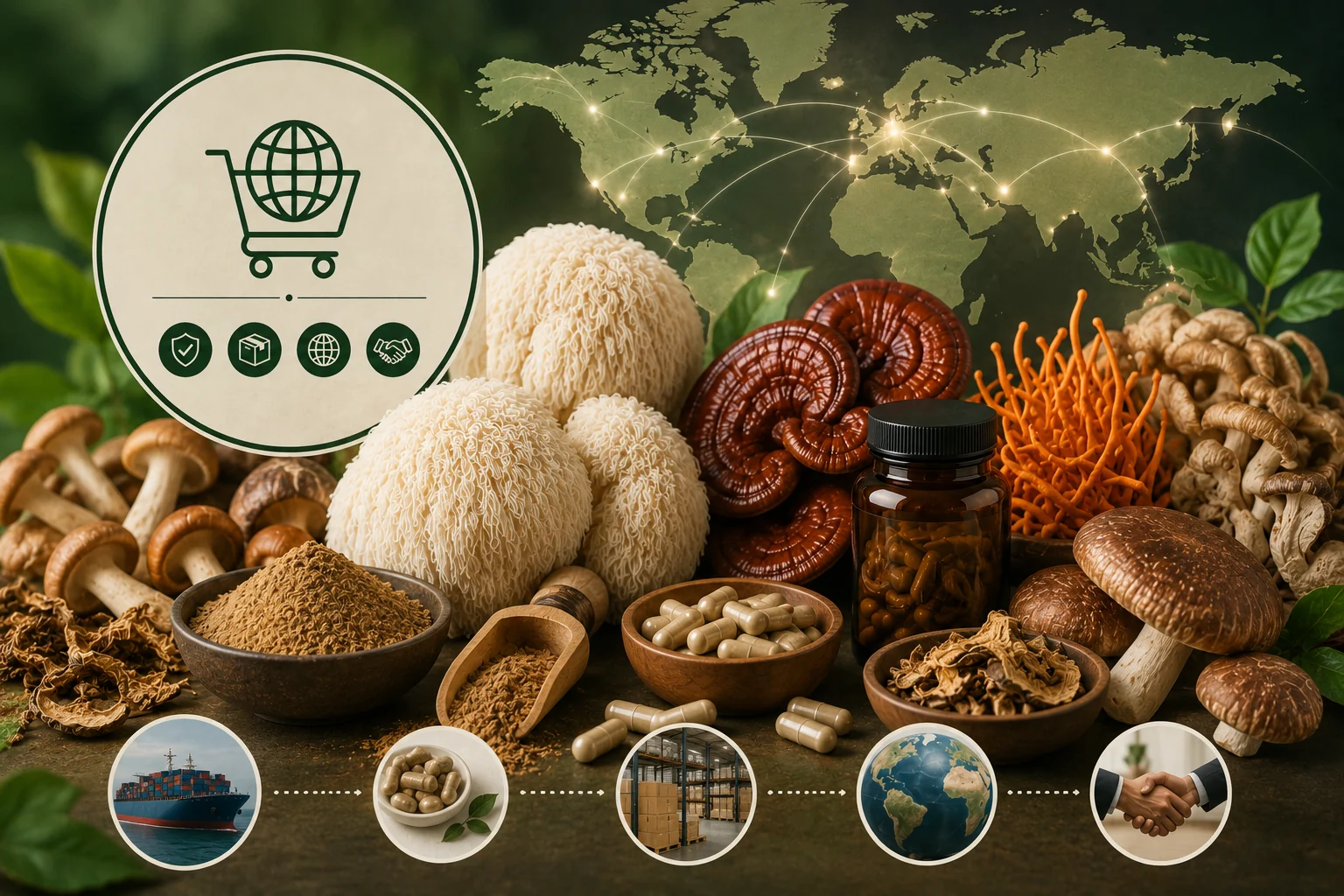
Entering the wholesale functional mushroom market can be both exciting and challenging. Hundreds of suppliers offer similar products, yet the quality of manufacturing, technical support, production consistency, and business reliability can vary significantly.
For wholesale buyers, selecting the right supplier is not simply about purchasing mushroom products. It is about establishing a dependable supply chain capable of supporting long-term business growth.
A well-planned purchasing strategy helps companies avoid costly mistakes, improve inventory management, and ensure that every shipment meets commercial expectations.
This guide walks through the most important considerations every wholesale buyer should evaluate before placing an order.
Understand Your Business Requirements First
Before requesting quotations, define exactly what your business needs.
Questions to consider include:
Are you purchasing raw ingredients or finished products?
Will products be sold under your own brand?
Do you require Private Label or White Label services?
What production volume do you expect?
Which markets will you serve?
What packaging format do you need?
Having clear purchasing objectives allows manufacturers to prepare accurate proposals and recommend suitable production solutions.
Decide Which Product Format Best Fits Your Business
Wholesale manufacturers produce functional mushrooms in multiple commercial formats.
The most common include:
Whole dried mushrooms
Mushroom powders
Mushroom extracts
Liquid extracts
Capsules
Tablets
Gummies
Functional beverages
Mushroom coffee
Bulk ingredients
Each format serves a different business purpose.
Bulk ingredients are commonly purchased for manufacturing, while finished products are often selected by retailers, distributors, and Private Label brands.
Choosing the correct format from the beginning simplifies future operations.
Evaluate the Manufacturer Instead of the Product Alone
Many buyers compare products while overlooking the company producing them.
An experienced manufacturer provides much greater long-term value than simply supplying mushroom ingredients.
Important evaluation criteria include:
Manufacturing experience
Production capacity
Product portfolio
Quality management systems
Export experience
Technical support
Packaging capabilities
Customer service
Long-term production stability
The manufacturer will become part of your supply chain, making reliability just as important as product quality.
Compare More Than Price
Price is an important purchasing factor, but it should never be the only one.
Professional buyers evaluate the complete purchasing value, including:
Product consistency
Production reliability
Manufacturing standards
Documentation
Delivery performance
Communication
Packaging quality
Future production flexibility
A lower purchase price may become more expensive if production delays or quality issues interrupt business operations.
Verify Available Documentation
Documentation plays an essential role in international wholesale trade.
Before placing an order, buyers should confirm which documents can be supplied.
Common documentation includes:
Certificate of Analysis (COA)
Product Specifications
Laboratory Test Reports
Microbiological Analysis
Heavy Metal Testing
Commercial Invoice
Packing List
Export Documentation
Preparing documentation in advance reduces customs delays and simplifies product registration where required.
Consider Minimum Order Quantities
Every manufacturer establishes production minimums based on manufacturing efficiency.
Before beginning negotiations, buyers should determine:
Current purchasing volume
Expected future demand
Storage capacity
Budget
Inventory turnover
Understanding production minimums helps businesses select suppliers capable of supporting both current requirements and future growth.
Review Packaging Options
Packaging influences transportation efficiency, warehouse operations, and product presentation.
Manufacturers commonly provide:
Industrial bulk packaging
Retail-ready packaging
Plastic jars
Glass containers
Stand-up pouches
Bulk cartons
Custom branded packaging
Selecting the appropriate packaging depends on how products will be distributed after delivery.
Plan Logistics Before Production Begins
Many purchasing delays occur because logistics planning starts too late.
Before production begins, buyers should discuss:
Shipping method
Delivery schedule
Destination country
Packaging dimensions
Pallet configuration
Customs requirements
Warehouse receiving procedures
Good logistics planning improves supply chain efficiency while reducing unexpected transportation costs.
Think Beyond the First Order
The first purchase is only the beginning of the business relationship.
When selecting a manufacturer, evaluate whether they can support:
Increasing production volumes
Additional product categories
Future Private Label projects
Product customization
International expansion
New packaging requirements
Choosing a scalable supplier reduces the need to change manufacturers as your business grows.
Build Strong Supplier Relationships
Successful wholesale purchasing depends on trust, communication, and consistency.
Long-term relationships often provide advantages such as:
Priority production scheduling
Better production planning
Stable pricing
Faster communication
Flexible manufacturing
Easier product development
Improved supply reliability
Manufacturers are more likely to invest additional resources in customers with whom they maintain long-term partnerships.
Common Wholesale Buying Mistakes
Many businesses make avoidable purchasing errors during supplier selection.
Some of the most common include:
Choosing suppliers only by price
Ordering without reviewing documentation
Ignoring production lead times
Purchasing more inventory than needed
Working with manufacturers lacking export experience
Changing suppliers too frequently
Failing to establish long-term purchasing strategies
Avoiding these mistakes improves purchasing efficiency while reducing commercial risk.
Conclusion
Wholesale purchasing is about much more than placing orders for mushroom products. It involves supplier evaluation, production planning, documentation, logistics, quality management, and long-term business strategy.
By understanding every stage of the wholesale purchasing process and working with an experienced functional mushroom manufacturer, supplement brands, distributors, and importers can create reliable supply chains that support sustainable business growth. Careful planning, transparent communication, and strong manufacturing partnerships remain the foundation of successful wholesale purchasing in today's rapidly expanding functional mushroom industry.
Ready to build a supplier shortlist? Compare our wholesale mushroom products, review commercial documentation and delivery options.