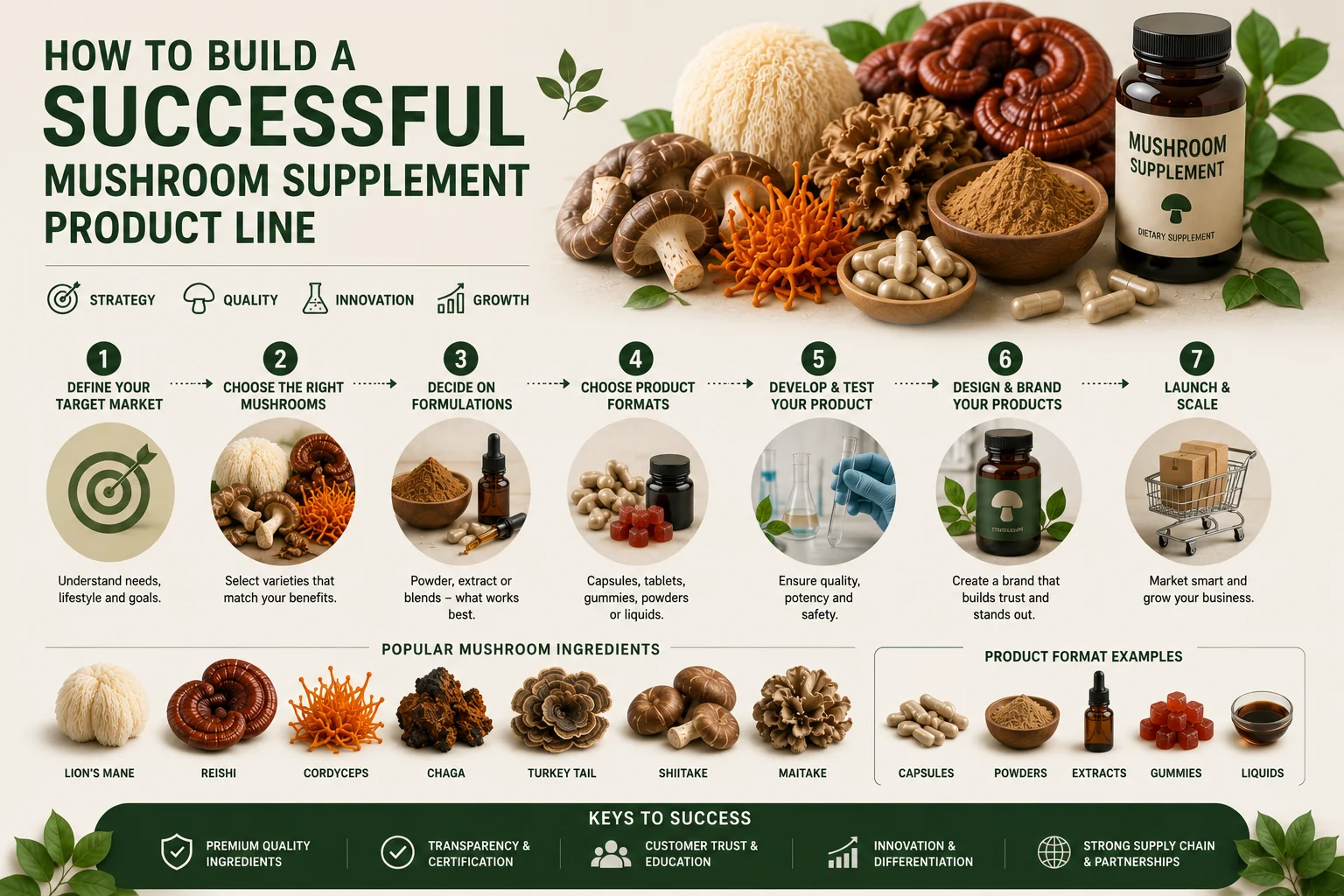
Many companies entering the functional mushroom industry make the same mistake: they focus on launching individual products instead of building a complete product ecosystem.
A successful supplement line is not a random collection of capsules and powders. It is a carefully planned portfolio where every product serves a specific purpose, complements the others, and creates opportunities for repeat purchases.
For distributors, retailers, and wholesale customers, a well-structured product range is often more attractive than a single best-selling item. Brands with a complete portfolio are perceived as more professional, more reliable, and better prepared to support long-term partnerships.
Building that portfolio requires strategic planning long before the first product enters production.
Start With a Core Collection
Rather than launching dozens of products at once, successful brands usually begin with a focused selection.
A core collection should include products that represent the foundation of the brand while covering the most common commercial applications.
A balanced launch may include:
Mushroom extract capsules
Bulk mushroom powder
Standardized mushroom extracts
Liquid mushroom extracts
Functional mushroom blends
Beginning with a manageable range allows companies to optimize inventory, simplify production planning, and evaluate market demand before expanding further.
Offer Multiple Product Formats
Modern customers expect flexibility.
Some buyers prefer capsules because of convenience, while others purchase powders for custom formulations or beverages.
A diversified product line may include:
Capsules
Tablets
Powders
Liquid extracts
Gummies
Drink mixes
Functional beverages
Bulk ingredients
Offering multiple formats enables the same mushroom ingredient to reach different customer groups without changing the overall brand identity.
Build Around Customer Needs Instead of Products
Strong supplement brands solve problems rather than simply selling ingredients.
Instead of organizing products only by mushroom species, many successful companies build collections around market categories.
Examples include:
Daily wellness
Cognitive support
Active lifestyle
Sports nutrition
Functional beverages
Premium extracts
Bulk manufacturing ingredients
This approach creates a clearer shopping experience while helping distributors present products more effectively.
Keep Your Product Line Consistent
One of the biggest challenges for growing brands is maintaining consistency.
Customers expect every product to follow the same quality standards, visual identity, and overall positioning.
Consistency should include:
Packaging design
Label structure
Ingredient quality
Manufacturing standards
Product naming
Brand messaging
A unified portfolio improves customer recognition and strengthens long-term brand value.
Plan for Future Expansion
A successful product line should leave room for growth.
Instead of releasing every possible product immediately, companies often create a roadmap for future additions.
Possible expansion areas include:
New mushroom species
Premium extract collections
Seasonal products
Advanced formulations
Sports nutrition
Functional drinks
Professional-use ingredients
International product versions
Planning ahead helps avoid unnecessary redesigns while keeping the portfolio organized.
Work With One Manufacturing Partner
Managing production through multiple factories often creates unnecessary complexity.
Using one experienced wholesale manufacturer offers several operational advantages.
These include:
Consistent product quality
Standardized manufacturing
Unified packaging
Simplified logistics
Faster production planning
Easier inventory management
Better communication
Long-term manufacturing partnerships also simplify future product launches because production systems are already established.
Create Products That Complement Each Other
Every product should strengthen the overall portfolio instead of competing with another item in the same collection.
For example, a customer purchasing mushroom extract capsules may later purchase:
Bulk powder
Liquid extracts
Functional beverage mixes
Gummies
Premium formulations
Creating natural product progression encourages repeat business while increasing average order value.
Think Like a Wholesale Buyer
Distributors and retailers evaluate product lines differently than individual consumers.
They often ask questions such as:
Is the product range complete?
Can one supplier provide everything?
Will products be available consistently?
Are packaging options flexible?
Can new products be added easily?
Designing a product line with wholesale buyers in mind makes the brand more attractive for long-term commercial partnerships.
Review Performance Regularly
A product line should never remain static.
Successful companies regularly analyze:
Sales performance
Customer feedback
Market demand
Emerging product categories
Manufacturing efficiency
Inventory turnover
This information helps determine which products deserve additional investment and which should be updated or replaced.
Continuous improvement keeps the portfolio competitive as the industry evolves.
Build a Brand, Not Just a Catalog
Many businesses focus exclusively on increasing the number of products they offer.
However, customers rarely remember companies because they have the largest catalog.
They remember brands that provide:
Reliable quality
Professional presentation
Consistent manufacturing
Clear product positioning
Dependable supply
Ongoing innovation
A carefully designed supplement line becomes part of the company's identity and creates lasting value beyond individual product sales.
Conclusion
Building a successful mushroom supplement product line is a long-term strategy rather than a single product launch. Companies that focus on portfolio planning, manufacturing consistency, customer needs, and future expansion create stronger brands capable of competing in international wholesale markets.
By combining high-quality manufacturing with a structured product strategy, supplement companies can develop portfolios that attract distributors, strengthen customer loyalty, and support sustainable growth for years to come.